
You have the same argument for the tenth time.
The subject may appear to be money, housework, jealousy, sex, children or a message that was not answered quickly enough. But after a while, you realise that the argument is almost never really about the thing that started it.
One partner says:
“You never listen to me.”
The other replies:
“Because whenever I say anything, you attack me.”
One demands more closeness.
The other withdraws.
The first becomes more anxious and demanding.
The second moves further away.
And both eventually conclude that the other person is the problem.
This is exactly the kind of cycle that couples therapy can help identify.
Couples therapy — also called couples counselling, relationship counselling or relationship therapy — is a form of psychological intervention focused primarily on the relationship between two partners rather than treating either person as the sole cause of the problem.
It can help couples improve communication, understand recurring conflicts, rebuild trust, explore jealousy or emotional distance, address infidelity and decide whether they want to repair the relationship or separate.
Importantly, couples therapy is not reserved for relationships that are about to end. The British Association for Counselling and Psychotherapy notes that people seek couples or relationship counselling at different stages of relationships and for problems ranging from communication and intimacy to jealousy, trust, infidelity, family conflict, financial difficulties and major life transitions.
Research also supports couple therapy as an established psychological intervention. A major review of contemporary couple therapy concluded that it has a strong empirical foundation for reducing relationship distress and improving relationship quality, with several established therapeutic approaches supported by research.
The first question, therefore, does not need to be:
“Is our relationship bad enough for therapy?”
A better question may be:
“Are we repeatedly failing to solve this by ourselves?”
Couples Therapy: What Is Couples Therapy?
Couples therapy is psychotherapy focused on the emotional and behavioural dynamics between partners.
Instead of asking only:
“What is wrong with you?”
or:
“What is wrong with your partner?”
therapy also asks:
“What happens between you?”
Joaquim Chaves Saúde describes couples therapy as an intervention focused on relationship dynamics, helping partners explore communication patterns, identify sources of conflict and understand beliefs that influence their interactions. Its objectives can include greater empathy, active listening and healthier ways of responding to everyday difficulties.
This relational focus is crucial.
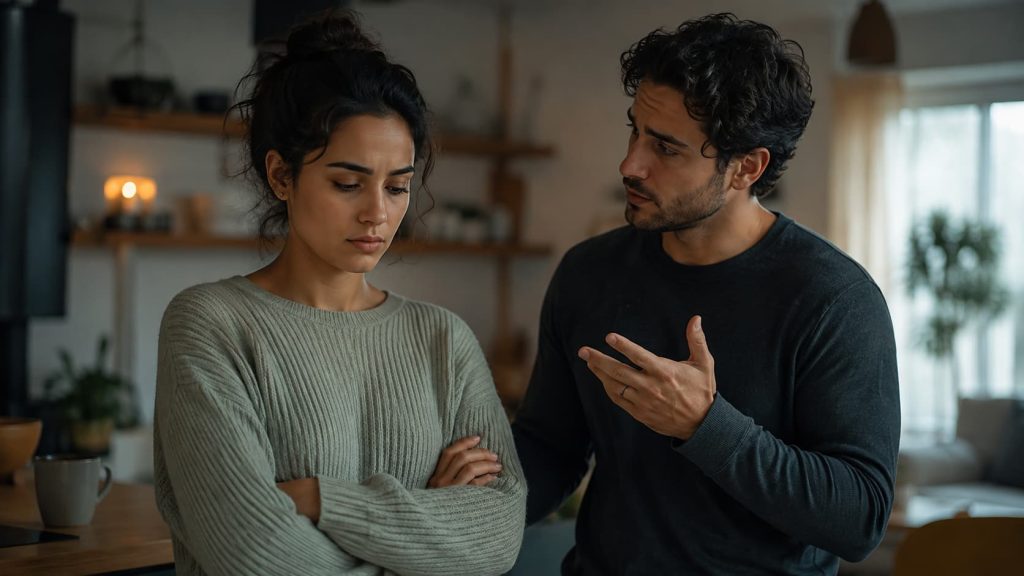
Imagine that one partner becomes silent whenever an argument begins.
Their partner interprets silence as rejection and becomes increasingly insistent:
“Talk to me.”
“Why are you ignoring me?”
“Say something.”
Feeling pressured, the silent partner withdraws further.
Now the first partner becomes even more distressed.
Who caused the problem?
That question may not be particularly useful.
The cycle is the problem.
One person’s pursuit increases the other’s withdrawal.
The withdrawal increases the pursuit.
Both partners are now unintentionally maintaining precisely the behaviour they dislike in the other.
Couples therapy helps make patterns like these visible.
Couples Therapy: When Should You Consider Couples Counselling?
People often wait too long before considering couples therapy.
They imagine counselling is the final intervention before divorce.
It does not have to be.
Couples counselling may be useful when you notice:
- Repeated arguments about the same subjects
- Communication breaking down
- Emotional distance
- Loss of intimacy
- Jealousy
- Trust problems
- Infidelity
- Emotional dependence
- Difficulty setting boundaries
- Different expectations about the future
- Conflict over children or parenting
- Financial disagreements
- Sexual difficulties
- Major life transitions
- One partner feeling unheard or neglected
- Resentment accumulating over time
- Uncertainty about whether to remain together
JCS similarly identifies frequent conflict, communication problems, loss of intimacy, infidelity, difficult decisions and life transitions as common reasons for seeking therapy. It also notes that couples therapy can help partners evaluate whether remaining together or separating is the healthier decision.
You therefore do not have to know the answer before starting therapy.
Sometimes the decision itself is the work.
Couples Therapy: How Does Couples Therapy for Communication Work?
Many people search specifically for couples therapy for communication.
They say:
“We just don’t communicate.”
But couples almost always communicate.
The problem is how they communicate and what happens to each person when the conversation becomes emotionally important.
A partner says:
“You never want to spend time with me.”
What they may mean is:
“I miss you and I’m frightened that we’re drifting apart.”
But the other person hears:
“You are a terrible partner.”
So they defend themselves:
“That’s ridiculous. I’m working all day for this family.”
Now the first person hears:
“My feelings do not matter.”
And the original request for closeness becomes an argument.
Couples therapy for communication can slow this process down.
The therapist may help partners distinguish criticism from needs, accusation from vulnerability and defensive reactions from the emotions underneath them.
JCS describes communication work as a major objective of couple therapy, including active listening, clearer expression of feelings and needs, understanding the partner’s perspective and reducing reactive responses.
The BACP makes a similar point: relationship counselling can help partners identify negative interaction and communication patterns, communicate differently, express needs more clearly and create healthier boundaries.
Better communication does not mean agreeing about everything.
It means becoming capable of disagreeing without repeatedly destroying the conversation.
Couples Therapy: Why Do Couples Have the Same Arguments Again and Again?
A recurring argument is one of the clearest reasons to consider couples therapy.
You already know both scripts.
One says:
“You don’t care.”
The other says:
“Nothing I do is ever enough.”
Then:
“You’re avoiding the point.”
Then:
“Why would I talk when you speak to me like this?”
Then silence.
Thirty minutes later, nobody remembers how the argument began.
These repeated sequences are important because couples can become experts at triggering each other’s vulnerabilities.
The BACP notes that present-day reactions in relationships can sometimes be influenced by earlier experiences. Feeling ignored by a partner, for example, may provoke an emotional response that seems disproportionate until the person recognises that feeling unheard has been psychologically significant for much longer.
Understanding this does not mean blaming childhood for everything.
Nor does it make current hurtful behaviour acceptable.
It means recognising that partners do not enter relationships as blank pages.
We bring expectations, fears, attachment experiences, previous relationships and learnt ways of protecting ourselves.
Couples therapy can help separate what belongs to the present relationship from what each partner may be bringing into it.
Couples Therapy: How Can Couples Therapy Help With Jealousy?
Jealousy is not automatically pathological.
If there is genuine deception or infidelity, jealousy may be a response to something real.
But jealousy can also become a destructive relationship cycle.
One partner feels insecure.
They ask:
“Who were you talking to?”
The answer does not provide enough certainty.
“Why did you like that photo?”
“Why did you take twenty minutes to answer?”
“Who is going to dinner?”
The questions become checking.
The other partner becomes frustrated and starts protecting their privacy more aggressively.
That secrecy — even if innocent — increases suspicion.
Now jealousy intensifies.
The BACP lists jealousy among the relationship difficulties that commonly bring couples to counselling.
In couples therapy, the goal is not automatically to reassure the jealous partner that every fear is irrational.
Therapy may need to explore:
Is trust actually being violated?
Is there a history of betrayal?
What does the jealous partner fear?
What behaviour follows that fear?
Are boundaries clear?
Is reassurance becoming endless?
Is one partner controlling the other’s friendships, phone or movements?
Is the other partner behaving in ways that reasonably undermine trust?
Good relationship therapy looks at evidence and patterns rather than assigning one person the role of “the jealous one”.
Couples Therapy: How Can Couples Therapy Address Emotional Dependence?
Emotional dependence can create relationships in which emotional security becomes almost entirely dependent on the partner.
A delayed reply feels unbearable.
A night out with friends feels threatening.
A disagreement feels like the beginning of abandonment.
One person may gradually require increasing amounts of reassurance:
“Do you still love me?”
“Are you angry?”
“Promise you won’t leave.”
“Are we okay?”
The partner initially provides reassurance.
Then more reassurance.
Then begins to feel exhausted.
They may withdraw.
The dependent partner experiences precisely what they fear: distance.
So they pursue reassurance even more intensely.
Couples therapy can help examine this cycle without treating the need for attachment as a weakness.
Human beings need relationships.
The problem emerges when one partner becomes responsible for regulating almost all of the other’s emotional security.
Relationship therapy can help both partners establish a healthier balance between connection and individuality.
That may involve clearer boundaries, increased tolerance of temporary distance, better expression of needs and, where appropriate, individual psychological work alongside couple therapy.
Couples Therapy: How Can Couples Therapy Help With Unstable Relationships?
Some relationships alternate between extraordinary closeness and intense conflict.
Monday:
“You’re the only person who truly understands me.”
Wednesday:
“I never want to see you again.”
Friday:
“I can’t live without you.”
Sunday:
Another explosive argument.
These unstable relationships can become emotionally exhausting.
The instability may have many possible causes.
Poor communication.
Fear of abandonment.
Jealousy.
Impulsivity.
Different attachment patterns.
Previous trauma.
Personality difficulties.
Alcohol or substance use.
Or simply a relationship in which two incompatible people repeatedly try to force compatibility.
Couples therapy should not begin by deciding which diagnosis explains the relationship.
Instead, the therapist can examine what happens before each escalation.
What triggers the conflict?
What does each person interpret?
How quickly do emotions intensify?
What behaviour follows?
How is the relationship repaired afterwards?
Does anything actually change before the next crisis?
The contemporary couple therapy literature emphasises understanding multi-level interpersonal sequences in which distressed partners may withdraw from one another or struggle for control rather than responding with connection and compassion.
Identifying the sequence creates an opportunity to change it.

Couples Therapy: Can Couples Therapy Help With Narcissistic Relationship Patterns?
Searches for “narcissistic relationships” have become extremely common.
This requires some caution.
A partner who is selfish is not automatically a narcissist.
Someone who behaves badly during an argument does not necessarily have narcissistic personality disorder.
And one partner cannot clinically diagnose the other from social-media checklists.
But a relationship can certainly contain problematic patterns involving:
- Constant need for admiration
- Entitlement
- Lack of empathy
- Difficulty accepting criticism
- Manipulative behaviour
- Persistent devaluation
- One partner’s needs always taking priority
- Extreme defensiveness
- Repeated boundary violations
Couples therapy can sometimes help explore these patterns when both partners are capable of participating honestly and safely.
The goal is not to spend sessions deciding:
“Who is the narcissist?”
It is to ask:
Can both people recognise the other’s needs?
Can each take responsibility?
Can boundaries be respected?
Can criticism be discussed without retaliation?
Can either partner acknowledge their contribution to the problem?
If one partner’s entire objective is to prove that the other is defective, therapy has very little room to work.
The BACP is explicit that counselling cannot change a person or relationship when those involved are not willing to make the necessary effort and commitment.
Couples Therapy: When Is Couples Therapy Not About Saving the Relationship?
One of the most useful things about couples therapy is that its objective does not have to be:
Stay together at all costs.
Sometimes the healthiest decision is separation.
Perhaps two people have changed.
Perhaps they want incompatible futures.
Perhaps trust cannot be restored.
Perhaps one partner has already decided to leave.
Couples therapy can help people examine that decision more clearly.
JCS specifically identifies evaluating the viability of the relationship as one possible goal of couple therapy and notes that therapy may help partners decide consciously whether to continue or separate.
The BACP likewise notes that counselling can support couples when separation is the safest or healthiest way forward, including helping them understand what happened and approach the end of the relationship more constructively.
This can be particularly important when children are involved.
Ending a romantic relationship does not necessarily end the need to communicate.
Sometimes the most successful outcome of couples therapy is not reconciliation.
It is clarity.
Couples Therapy: How Does Couples Therapy for Infidelity Work?
Couples therapy for infidelity deals with one of the most difficult crises a relationship can face.
After betrayal, the injured partner may become hyperalert.
Where were you?
Who messaged you?
How can I believe anything you say?
The partner who had the affair may feel guilt, shame, defensiveness or frustration at answering the same questions repeatedly.
Trust, once automatic, becomes something that has to be examined consciously.
Couples therapy can create a structured setting in which both partners explore what happened, what the betrayal means for each of them and whether they genuinely want to rebuild the relationship.
JCS identifies betrayal and loss of trust as painful relationship crises for which therapy can provide a space for honest exploration and conscious decisions about what happens next.
Research reviews also find empirical support for couple-based treatments targeting specific relationship problems including infidelity.
But couples therapy for infidelity does not guarantee reconciliation.
There are at least two questions:
“Can this relationship be repaired?”
and:
“Do we both want to repair it?”
They are not the same question.
Couples Therapy: Can Trust Be Rebuilt After Infidelity?
Trust after infidelity does not usually return because one person says:
“Trust me.”
The injured partner already did.
Repair often requires consistent behaviour over time.
Couples therapy may help the couple explore:
What information is necessary?
What level of transparency is reasonable?
What does accountability look like?
Can the person who broke trust tolerate the injured partner’s pain without immediately becoming defensive?
Can the injured partner eventually move from investigation towards a decision about whether trust can be rebuilt?
Is the affair over?
Are both partners actually committed to the work?
There is no universal timetable.
For some couples, infidelity becomes the end of the relationship.
For others, it becomes a crisis from which a different relationship eventually emerges.
The purpose of couples therapy is not to predetermine which outcome should occur.
It is to make the decision less reactive and more conscious.
Couples Therapy: Can Couples Therapy Restore Intimacy?
Loss of intimacy does not necessarily mean a relationship has failed.
Adult life is very good at consuming relationships.
Work.
Children.
Bills.
Phones.
Family responsibilities.
Sleep deprivation.
Stress.
Two people can gradually become excellent logistical partners while barely remaining romantic partners.
JCS identifies rebuilding emotional connection and intimacy as one of the common purposes of couples therapy, noting that routine and adult responsibilities can gradually affect the emotional bond.
Couples therapy may explore emotional intimacy, affection, sexuality, time together and the resentments that have accumulated between partners.
Sometimes people say:
“We don’t have sex any more.”
But underneath there may be:
“I don’t feel appreciated.”
“I feel rejected.”
“I am exhausted.”
“I don’t trust you.”
“I only experience physical affection when you want sex.”
Sexual distance can therefore be a symptom of a wider relational pattern.
Treating the symptom alone may miss the problem.
Couples Therapy: What Happens in the First Couples Therapy Session?
The first couples therapy session is not a courtroom.
The therapist is not there to decide who wins.
Normally, the psychologist begins by understanding:
How did you meet?
How has the relationship changed?
Why are you seeking help now?
What does each partner believe the main problem is?
What has already been tried?
What does each person want from therapy?
JCS describes first sessions as involving explanation of the therapeutic process, discussion of the relationship history, identification of central problems, examination of communication patterns and the establishment of shared therapeutic goals.
This can reveal something interesting.
Partner A says:
“Our problem is communication.”
Partner B says:
“Our problem is trust.”
Both may be describing the same cycle from different positions.
The therapist’s job is not simply to choose one version.
It is to develop a useful understanding of the relationship.
Couples Therapy: Does the Couples Therapist Take Sides?
A good couples therapist does not simply become the referee in a weekly argument.
Neutrality does not mean pretending every behaviour is equally reasonable.
If one partner insults, threatens or repeatedly violates agreed boundaries, a therapist can identify that behaviour clearly.
But the therapeutic alliance needs to include both people.
JCS emphasises therapist impartiality and confidentiality as important elements of a safe therapeutic environment.
The BACP also stresses that working with couples requires specific training because the therapist is working simultaneously with two individuals and with the relationship between them.
The therapy room should therefore not become:
“You see? Even the psychologist agrees that you’re wrong.”
That simply reproduces the conflict in a new setting.
A better goal is to understand how each partner contributes to the system and what each can change.
Couples Therapy: What Approaches Are Used in Couples Therapy?
There is no single model of couples therapy.
Modern couple therapy includes several established approaches.
A major review published in Family Process identifies cognitive-behavioural couple therapy, integrative behavioural couple therapy and emotionally focused couple therapy among approaches with sufficient evidence to be considered well-established treatments for relationship distress.
Different approaches may emphasise different mechanisms.
Some focus strongly on communication and behaviour.
Others focus on attachment and emotional connection.
Some emphasise acceptance alongside behavioural change.
Others explore deeper interpersonal patterns.
But contemporary approaches share several broad aims, including reducing distress and improving relationship quality. Research also shows considerable common ground in attention to thoughts, feelings, behaviours and relationship sequences.
The relevant question is therefore not:
“What is the one best therapy for every couple?”
It is:
“What approach makes sense for this couple and this problem?”
Couples Therapy: Does Couples Therapy Actually Work?
Yes, research indicates that couples therapy can be effective for relationship distress.
The 2022 review by Lebow and Snyder concluded that systematic reviews and meta-analyses support couple therapy for improving relationship functioning. It reports that the average person receiving couple therapy finishes treatment better off than around 70–80% of people in untreated comparison groups.
This does not mean therapy works for every couple.
Nor does it mean every improvement lasts permanently.
The same review notes that relationship problems can return over longer follow-up periods for some couples, making maintenance of gains an ongoing challenge.
Relationships continue evolving after therapy ends.
Children arrive.
Jobs change.
Parents become ill.
People age.
Financial circumstances change.
The point of therapy is therefore not to engineer a conflict-free relationship.
No such relationship exists.
It is to develop ways of handling future problems without automatically falling back into the same destructive cycle.
Couples Therapy: What Can Couples Therapy Not Do?
Couples therapy is not magic.
It cannot make your partner change because you want them to.
It cannot guarantee that romantic feelings will return.
It cannot erase an affair.
It cannot transform incompatible life goals into compatible ones.
And it cannot create commitment where one person has no interest in participating.
The BACP makes this limitation explicit: relationship counselling can provide understanding, tools and guidance, but it cannot change a person or relationship if those involved are unwilling to put in the necessary effort.
JCS similarly stresses that both partners need willingness to participate, listen and remain open to change.
The therapist can help you see the road.
The therapist cannot walk it for you.
Couples Therapy: When Might Couples Therapy Not Be Appropriate?
There is an important difference between relationship conflict and a relationship in which somebody is unsafe.
Where there is coercive control, intimidation, serious threats, violence or fear of retaliation, ordinary conjoint couples therapy may not be appropriate or safe without careful specialist assessment.
This matters because ordinary couples therapy assumes that both partners have sufficient freedom to speak honestly.
If one person fears what will happen at home after disclosing something in therapy, the basic conditions for open couple work may not exist.
Similarly, severe substance problems, acute mental health crises or other individual difficulties may sometimes need separate or parallel treatment.
The decision should be made clinically rather than from a generic checklist.
Couples therapy works on a relationship.
It should never require someone to remain in an unsafe one.
Couples Therapy: What Is Online Couples Therapy?
Online couples therapy provides relationship therapy through secure video sessions rather than requiring both partners and the psychologist to be in the same physical room.
For some couples this is simply more practical.
One partner travels.
The couple lives far from the clinic.
Childcare makes travelling difficult.
Work schedules leave little time.
Or two partners are temporarily living in different locations.
Contemporary couple therapy research specifically identifies telehealth and digital technologies as an important development in the field, including adaptations of established couple interventions to videoconferencing and online formats.
The underlying therapeutic work remains similar.
You still examine relationship patterns.
You still communicate with one another.
The therapist still observes how those interactions unfold.
The main difference is where everyone is sitting.
Couples Therapy: Is Online Couples Therapy Right for You?
Online couples therapy can work well when both partners have a private space, reliable internet connection and enough emotional safety to discuss difficult material remotely.
It can be particularly useful when geography would otherwise make regular attendance difficult.
But convenience is not the only consideration.
Some couples prefer being physically present with the psychologist.
Others feel more comfortable speaking from home.
There is no need to turn the question into a competition between online and face-to-face therapy.
The useful question is:
Which format gives this couple the best chance of attending consistently and engaging properly in the work?
Consistency matters more than owning the perfect therapy chair.
Couples Therapy: Should You Choose Couples Therapy or Individual Therapy?
Sometimes the difficulty clearly belongs within the relationship.
Sometimes one partner primarily needs individual psychological support.
And sometimes both are appropriate.
Couples therapy may make sense when the central problem is:
Communication.
Trust.
Intimacy.
Recurring conflict.
Jealousy within the relationship.
Infidelity.
Decision-making as a couple.
Individual therapy may be more appropriate when one person’s main difficulty exists independently of the relationship — for example, a longstanding anxiety problem, depression, trauma or another individual psychological difficulty.
There can also be overlap.
A partner may have personal attachment or self-esteem difficulties that contribute to emotional dependence, while the couple simultaneously needs help changing their interaction.
Assessment helps determine the appropriate format.
The answer does not always have to be either/or.

Couples Therapy: How Do You Choose a Couples Therapist?
Couple work requires specific skills.
The BACP recommends finding a therapist with experience and training specifically in working with couples, noting that couple therapy differs substantially from individual therapy.
JCS likewise recommends checking for specific couples counselling training and, in Portugal, professional registration with the Ordem dos Psicólogos Portugueses.
Useful questions include:
Does the psychologist regularly work with couples?
What therapeutic approach do they use?
How do they structure the first session?
How do they handle confidentiality?
How do they approach infidelity?
What happens if one partner wants to separate?
Do they provide online couples therapy?
Will there ever be individual sessions?
A psychologist may be excellent at individual psychotherapy without specialising in couple therapy.
The relationship deserves someone trained to work with the relationship itself.
Couples Therapy: How Sua Clínica Can Help With Relationship Problems
At Sua Clínica, couples therapy can provide a structured and confidential space to understand what is happening between you rather than simply repeating the same argument at home.
You may be seeking help because of:
Communication problems.
Jealousy.
Emotional dependence.
Loss of trust.
Infidelity.
Emotional distance.
Intimacy problems.
Unstable relationship patterns.
Recurring arguments.
Difficulties setting boundaries.
Conflict around children or family.
Or uncertainty about whether the relationship should continue.
The work begins by understanding the pattern rather than deciding in advance who is right.
Psychological support may help you identify what happens during conflict, recognise the emotions and needs underneath defensive behaviour and develop different ways of responding to one another.
Where one partner also has individual psychological difficulties, the psychologist can help identify whether separate psychological support may be useful.
Sua Clínica can also provide online couples therapy, allowing couples to access psychological support when attending the clinic in person is not practical.
The objective is not simply to keep two people together.
It is to help them make the relationship healthier — or, when necessary, make clearer decisions about what comes next.
Couples Therapy: The Bottom Line on Couples Counselling and Relationship Therapy
Couples therapy is a psychological intervention focused on the relationship between partners.
It can help with communication, repeated conflict, jealousy, emotional dependence, trust, intimacy, infidelity and difficult decisions about the future.
It can also reveal something many couples struggle to see while they are inside the conflict:
The enemy is often the pattern, not the partner.
One person criticises because they want connection.
The other withdraws because criticism feels overwhelming.
The withdrawal feels like rejection.
The criticism becomes stronger.
Soon both partners are defending themselves from a threat inadvertently created by the way they are trying to protect themselves.
Couples counselling and relationship counselling can help slow these patterns down, improve communication and create space for more deliberate responses. The BACP describes relationship counselling as a setting in which couples can explore disconnection, improve communication and develop healthier ways of relating.
The evidence also supports couples therapy as a genuine psychological treatment rather than merely mediated conversation. Contemporary reviews find substantial evidence that couple therapy can reduce relationship distress and improve relationship quality.
But couples therapy does not guarantee reconciliation.
Sometimes the solution is repair.
Sometimes it is greater independence within the relationship.
Sometimes it is rebuilding trust after infidelity.
Sometimes it is learning to disagree without causing damage.
And sometimes it is recognising that separating is the healthier decision.
That is why the useful question is not:
“Can the therapist save our relationship?”
It is:
“Can we understand what is happening well enough to decide what we want to do differently?”
If communication, jealousy, emotional dependence, infidelity or recurring conflict is affecting your relationship, contact Sua Clínica to speak to a psychologist about couples therapy, couples counselling or online couples therapy and take the first step towards understanding the pattern and deciding what comes next.