
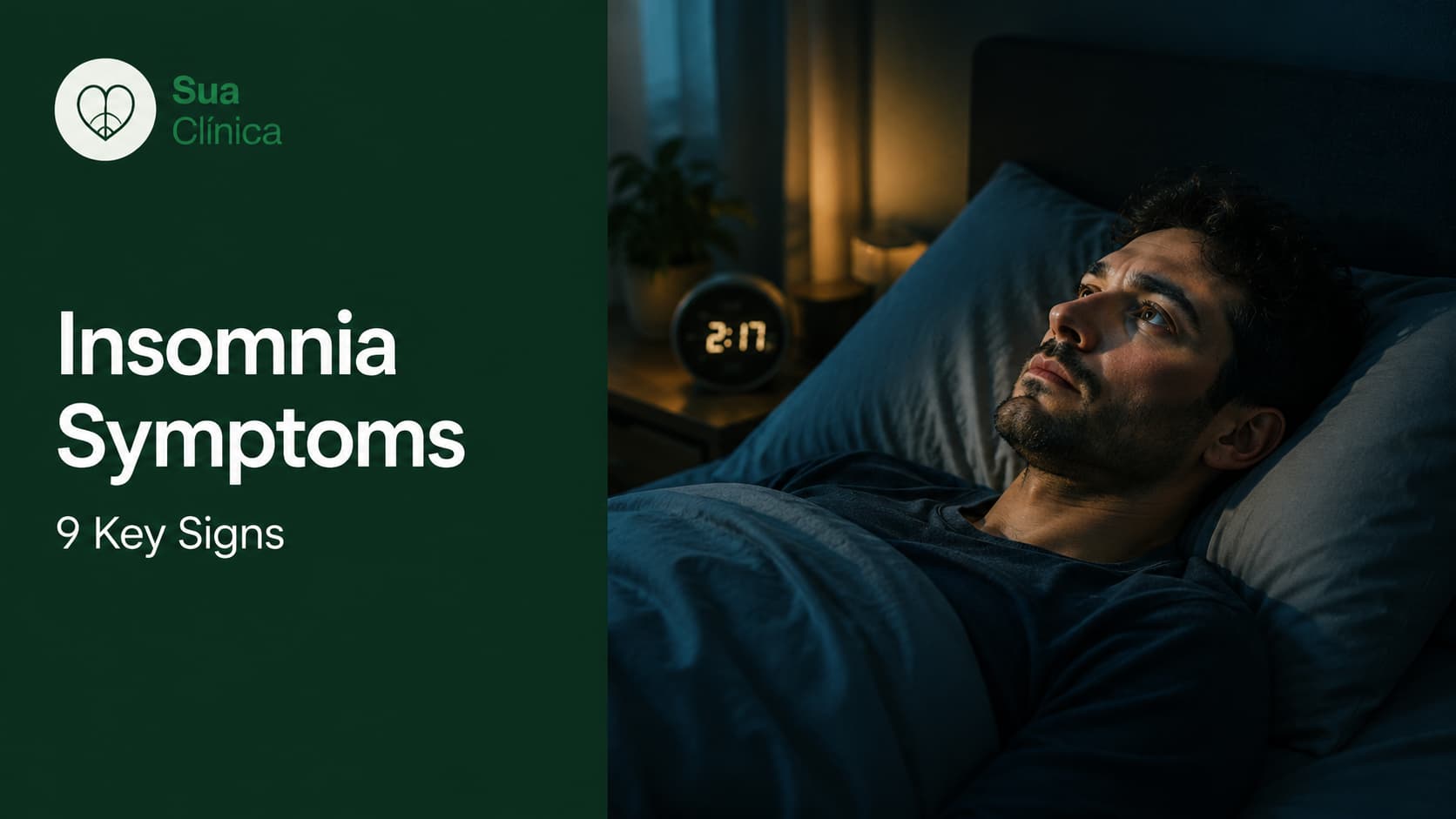
You go to bed exhausted, switch off the light and expect sleep to come.
Instead, your mind becomes more active.
You think about tomorrow’s work. Then about something you said earlier in the day. Then about whether you are going to sleep at all. You look at the clock. Forty minutes have passed.
Eventually, you fall asleep – only to wake at 3.17 a.m.
Now another calculation begins.
“If I fall asleep immediately, I still have four hours.”
At 4.05 a.m., you are still awake.
For many people, this happens occasionally. Stress, travel, illness or an important event the following day can disrupt even a normally reliable sleep pattern. But when difficulty falling asleep, waking repeatedly during the night or waking too early becomes persistent, these may be insomnia symptoms.
Insomnia is a common sleep disorder that affects both the ability to sleep and how a person functions during the day. The NHS defines insomnia as regularly having problems sleeping, while the Mayo Clinic describes it as difficulty falling asleep, staying asleep or waking too early and being unable to return to sleep.
And insomnia is not only about the hours spent awake at night.
Poor sleep can affect concentration, memory, mood, irritability, energy, work and relationships. In some cases, the anxiety created by not sleeping can itself become part of the problem.
Understanding the insomnia symptoms, identifying possible insomnia causes and knowing which forms of insomnia treatment are available can help break that cycle.
Insomnia Symptoms: What Is Insomnia?
Insomnia symptoms involve more than simply having one bad night’s sleep.
Almost everyone occasionally struggles to sleep. Perhaps you have an early flight, an important meeting, an argument with someone close to you or too much coffee late in the afternoon.
Insomnia becomes more relevant when sleep difficulties happen repeatedly and begin to affect life during the day.
Typical insomnia can involve:
- Difficulty falling asleep
- Waking several times during the night
- Lying awake for long periods
- Waking earlier than intended
- Being unable to return to sleep
- Feeling tired even after spending enough time in bed
- Daytime irritability
- Difficulty concentrating or remembering things
- Worrying repeatedly about whether you will sleep
The NHS distinguishes short-term insomnia, lasting less than three months, from long-term insomnia lasting three months or longer. Cleveland Clinic notes that chronic insomnia generally involves symptoms at least three times a week for at least three months.
Duration matters because a temporary reaction to a stressful week is different from a sleep difficulty that has gradually become part of everyday life.

Insomnia Symptoms: Difficulty Falling Asleep at Night
One of the most familiar insomnia symptoms is difficulty falling asleep.
You may feel tired throughout the evening but become unexpectedly alert as soon as you get into bed.
Twenty minutes pass.
Then forty.
Then an hour.
The longer you remain awake, the more frustrated you become.
This can create an unfortunate psychological paradox: the harder you try to sleep, the harder sleep can become.
Sleep is not normally something we achieve through effort in the same way we complete a work task. Trying to force it can increase monitoring and arousal.
You may begin asking:
“Why am I still awake?”
“What if tomorrow is a disaster?”
“How am I going to function on five hours?”
“Why can everyone else sleep normally except me?”
The bedroom gradually stops being associated only with sleep. It becomes associated with waiting, frustration, clock-watching and anxiety.
This is one of the reasons psychological treatment for insomnia looks not only at sleep itself, but also at the thoughts and behaviours that can unintentionally maintain the problem.
Insomnia Symptoms: Waking During the Night
Another common pattern of insomnia symptoms is waking during the night.
You may fall asleep easily at 11 p.m. but wake at 2 a.m., 3 a.m. or several times before morning.
Cleveland Clinic lists waking in the middle of the night as a common insomnia symptom, while the NHS similarly includes waking several times and lying awake during the night.
Brief awakenings do not necessarily indicate a problem. Sleep naturally changes throughout the night, and people can wake briefly without remembering it in the morning.
The difficulty arises when you wake and remain awake.
Perhaps your mind immediately begins reviewing tomorrow’s responsibilities.
Or you reach for your phone.
You check the time.
Then again.
And again.
What began as a normal brief awakening becomes a long period of alertness.
For some people, this pattern becomes so predictable that they begin fearing it before they even go to bed.
Insomnia Symptoms: Waking Too Early and Being Unable to Sleep Again
Insomnia symptoms can also take the form of early-morning waking.
Perhaps your alarm is set for 7 a.m., but you wake at 4.45 a.m. and cannot get back to sleep.
You remain in bed hoping sleep will return.
It does not.
By the time you need to get up, you already feel as though part of the day’s energy has been spent.
Early waking can occur for different reasons and should not automatically be attributed to one psychological condition. Mayo Clinic notes that waking too early is a recognised insomnia symptom and that insomnia may also occur alongside mental health conditions such as depression and anxiety.
When early waking is persistent, especially if accompanied by significant changes in mood, energy or functioning, it is worth considering the broader clinical picture rather than treating the sleep problem in isolation.
Insomnia Symptoms: Why Feeling Tired During the Day Matters
Some of the most important insomnia symptoms occur when you are no longer in bed.
Poor sleep can affect the entire following day.
You may feel physically tired but unable to nap.
You may read the same paragraph several times without absorbing it.
A normal conversation requires more concentration.
Small inconveniences become unusually irritating.
Tasks that normally take half an hour take twice as long.
Mayo Clinic identifies daytime tiredness, irritability, anxiety or low mood, difficulty concentrating, memory problems and increased errors among the possible consequences of insomnia. Cleveland Clinic similarly describes slowed thinking, memory problems, mood changes and difficulty performing work or normal activities.
This daytime impact is important.
Insomnia is not defined simply by someone’s personal preference for sleeping more. The clinical significance lies partly in how disrupted sleep affects daytime functioning.
If you are consistently unable to concentrate at work, becoming increasingly irritable at home or struggling to stay alert when driving, the consequences extend well beyond the bedroom.

Insomnia Symptoms: When Tiredness Becomes Irritability and Poor Concentration
Persistent insomnia symptoms can change the way ordinary life feels.
Consider a simple working day after several poor nights of sleep.
An email arrives that requires a decision.
Normally, you would answer it in five minutes.
Today, you reread it three times.
A colleague interrupts you.
You feel disproportionately irritated.
Later, you forget something you had agreed to do.
Now you are annoyed with yourself too.
At home, someone asks an innocent question and you respond sharply because your mental resources already feel depleted.
This is not necessarily a personality change.
Sleep disruption can reduce attention, slow thinking and make emotional regulation more difficult.
The result can become circular.
Poor sleep creates stress during the day.
That stress follows you into the evening.
The increased arousal makes sleeping harder.
And another poor night begins.
Insomnia Symptoms and Insomnia Causes: Why Stress Can Keep You Awake
Among the most common insomnia causes behind persistent insomnia symptoms is stress.
Work deadlines.
Financial concerns.
Relationship difficulties.
Family problems.
Health worries.
A bereavement.
A separation.
Uncertainty about the future.
Mayo Clinic notes that concerns involving work, school, health, money or family can keep the mind active at night, while stressful life events may also trigger insomnia. The NHS similarly identifies stress, anxiety and depression among common causes.
This makes intuitive sense.
If your brain believes there is an unresolved problem, bedtime does not necessarily make the problem disappear.
During the day, emails, conversations, traffic and other tasks provide distractions.
At midnight, in a silent bedroom, there may be nothing competing with your thoughts.
Anxiety can then create another layer:
You are no longer only worried about tomorrow’s problem.
You are worried that worrying about tomorrow’s problem will stop you sleeping.
That secondary anxiety can become a powerful part of insomnia.
Insomnia Symptoms and Insomnia Causes: Anxiety, Depression and Mental Health
Persistent insomnia symptoms commonly interact with mental health.
Anxiety can make it difficult to switch off because the mind remains focused on possible threats and future problems. Sua Clínica’s guide to anxiety symptoms explores this in greater detail.
Depression can affect both the quantity and quality of sleep, as explored in Sua Clínica’s guide to depression.
Chronic stress can leave someone exhausted while simultaneously maintaining a state of psychological alertness.
Mayo Clinic notes that insomnia often occurs alongside other mental health conditions, while Cleveland Clinic reports that many people with chronic insomnia also have at least one mental health disorder, such as anxiety or depression.
The relationship can work in both directions.
Psychological distress can disrupt sleep.
And persistent sleep disruption can make psychological distress harder to manage.
This is why effective assessment asks more than:
“How many hours are you sleeping?”
It may also ask:
“What happens in your mind when you go to bed?”
“When did the problem begin?”
“What was happening in your life at that time?”
“What do you fear will happen if you do not sleep?”
“How are you feeling during the day?”
Sometimes treating insomnia means addressing both sleep and the anxiety, stress or low mood surrounding it.
Insomnia Symptoms and Insomnia Causes: Caffeine, Alcohol and Everyday Habits
Not every case of insomnia symptoms begins with a psychological disorder.
Everyday habits can influence sleep more than people realise.
Caffeine is an obvious example.
Coffee may help you cope with tiredness after a poor night’s sleep.
But more caffeine later in the day may make the following night’s sleep harder.
Now you wake tired again.
So you drink more coffee.
A coping mechanism has quietly joined the cycle.
Alcohol can create a similar misunderstanding. It may initially make a person feel sleepy, but Mayo Clinic notes that alcohol can interfere with deeper stages of sleep and contribute to waking during the night. Caffeine and nicotine are stimulants that can also disrupt sleep.
Irregular sleep schedules, frequent naps, late-night screen use and continually changing bedtimes can also contribute.
The NHS recommends consistent waking times, avoiding daytime naps and creating a quiet, comfortable sleep environment as part of basic insomnia self-management.
These habits matter, but insomnia should not be reduced to “bad sleep hygiene”.
Someone with chronic insomnia may already have tried every pillow, herbal tea and bedtime routine imaginable.
Sometimes a more structured intervention is needed.
Insomnia Symptoms and Insomnia Causes: Could There Be a Physical or Medical Explanation?
Because insomnia symptoms can have many causes, persistent sleep difficulties should not automatically be treated as purely psychological.
Pain can disrupt sleep.
Hormonal changes can affect it.
Certain medications may interfere with sleep.
Gastro-oesophageal reflux, asthma and thyroid problems can contribute.
Other sleep disorders can also cause repeated night-time waking.
Both the NHS and Mayo Clinic identify medical conditions, medicines and sleep disorders such as sleep apnoea or restless legs syndrome among possible contributors to insomnia.
This matters particularly if sleep problems are accompanied by symptoms such as loud snoring, interrupted breathing, unusual movements during sleep or significant unexplained physical symptoms.
Psychological support can be valuable for insomnia, but good clinical care also means recognising when medical or specialist sleep assessment may be required.
Insomnia Symptoms: When Worrying About Sleep Becomes Part of Insomnia
One of the most frustrating insomnia symptoms is not technically sleep itself.
It is fear of not sleeping.
You may begin thinking about sleep hours before bedtime.
“What if tonight is like last night?”
You calculate how much sleep you need.
You cancel an evening plan because you want to be in bed early.
You go to bed before you are sleepy because you want to maximise your opportunity to sleep.
Then you lie there awake.
At 1 a.m., the clock tells you that tomorrow is getting worse by the minute.
Eventually, the bedroom itself becomes associated with effort and frustration.
Mayo Clinic specifically lists ongoing worry about sleep among possible insomnia symptoms.
This phenomenon helps explain why simply telling someone with insomnia to “relax” is rarely useful.
The anxiety has often become part of a learned pattern.
Psychological treatment can help change that pattern.
Insomnia Symptoms: How Is Insomnia Diagnosed?
There is no single blood test for insomnia symptoms.
Assessment normally begins with understanding your sleep pattern and medical history.
A healthcare professional may ask:
- How long does it usually take you to fall asleep?
- How often do you wake during the night?
- How long are you awake?
- What time do you normally wake?
- How long has this been happening?
- How tired are you during the day?
- Do you nap?
- Do you use caffeine, nicotine or alcohol?
- Are you taking medication?
- Are you experiencing anxiety, depression or unusual levels of stress?
- Do you snore heavily or stop breathing during sleep?
Cleveland Clinic notes that assessment may involve health history, sleep habits and symptoms, with additional testing when another sleep disorder needs to be ruled out.
A sleep diary can also be useful because memory is not always an accurate measure of several weeks of disturbed sleep.
The objective is not merely to confirm that you sleep badly.
It is to understand why.
Insomnia Symptoms and Insomnia Treatment: Why CBT-I Is Important
For persistent insomnia symptoms, one of the most important psychological treatments is cognitive behavioural therapy for insomnia, usually known as CBT-I.
Cleveland Clinic describes CBT-I as a first-line treatment for insomnia. It is designed to identify and change the behaviours, thoughts, beliefs and emotions that may be maintaining the sleep problem.
This is much more specific than general psychotherapy or simply talking about stress.
CBT-I can include several components.
Stimulus control works on rebuilding the association between the bed and sleep rather than the bed and prolonged wakefulness.
Sleep scheduling or sleep restriction approaches aim to reduce the mismatch between how much time someone spends in bed and how much they actually sleep.
Cognitive work addresses beliefs and fears surrounding sleep.
For example:
“If I don’t get eight hours tonight, tomorrow will be impossible.”
That thought creates pressure.
Pressure increases arousal.
Arousal makes sleep less likely.
Therapy does not pretend that sleep deprivation is pleasant. It helps replace catastrophic predictions and unhelpful behaviours with a more realistic relationship with sleep.
Insomnia Symptoms and Insomnia Treatment: Can Psychology Help You Sleep Better?
Psychological treatment can be particularly useful when insomnia symptoms have become intertwined with stress, anxiety or learned sleep behaviours.
A psychologist may explore what happens before, during and after a poor night’s sleep.
What do you do when you cannot sleep?
Do you remain in bed for hours?
Do you check the clock?
Do you pick up your phone?
Do you cancel activities the following day?
Do you sleep late to compensate?
Do you become increasingly anxious as bedtime approaches?
These behaviours are understandable attempts to solve the problem.
But some can unintentionally maintain it.
CBT-I helps identify those cycles and replace them with strategies that support more stable sleep. The NHS also notes that CBT may be offered for insomnia to change thoughts and behaviours that interfere with sleep.
If anxiety, depression, chronic stress or another psychological difficulty is contributing to the insomnia, therapy can also address that broader problem.
Insomnia Symptoms and Insomnia Treatment: What Sleep Habits Can Help?
When insomnia symptoms are recent or mild, changes to everyday habits may help.
The NHS recommends measures including going to bed when sleepy, getting up at the same time every day, relaxing before bedtime, exercising during the day and keeping the bedroom dark, quiet and comfortable. It also advises avoiding caffeine, alcohol and nicotine close to bedtime and avoiding daytime naps.
The consistency is often more important than the sophistication.
You do not necessarily need an elaborate “perfect sleep routine”.
A stable waking time may be more useful than buying another sleep gadget.
Likewise, spending twelve hours in bed trying to obtain eight hours of sleep can sometimes worsen frustration rather than improve sleep.
The central aim is to make sleep more predictable and reduce the behaviours that reinforce wakefulness.
For chronic insomnia, however, generic sleep advice alone may not be sufficient, which is why structured CBT-I differs from a simple list of sleep hygiene tips.

Insomnia Symptoms and Insomnia Treatment: What About Sleeping Pills?
People experiencing severe insomnia symptoms understandably want relief.
Medication can sometimes form part of insomnia treatment, but it should be discussed with an appropriate healthcare professional.
The NHS notes that sleeping pills are now prescribed relatively rarely for insomnia because they can cause significant side effects and dependence. When prescribed, they are generally used for short periods in severe cases or when other approaches have not worked.
Cleveland Clinic also lists medication as one possible treatment approach while emphasising that individual health, interactions and side effects need to be considered.
This is why taking someone else’s sleeping medication or assuming that an over-the-counter or “natural” product is automatically safe is not a good strategy.
For a psychology clinic, the important distinction is straightforward:
Psychotherapy can address psychological and behavioural factors maintaining insomnia.
Medication decisions require appropriate medical evaluation.
Often, good treatment means understanding which of those routes — or combination of routes — fits the individual problem.
Insomnia Symptoms: When Should You Seek Professional Help?
You do not need to seek treatment because of every restless night.
But insomnia symptoms deserve professional attention when they become persistent or begin affecting your ability to function.
The NHS recommends contacting a GP when changes in sleep habits have not helped, sleep problems have continued for months or insomnia is affecting everyday life in a way that makes it difficult to cope.
Consider seeking help if:
- You regularly struggle to fall asleep
- You repeatedly wake during the night and cannot return to sleep
- You consistently wake much earlier than intended
- Sleep difficulties have persisted for months
- You are increasingly anxious about bedtime
- Fatigue is affecting work or study
- Irritability is affecting relationships
- Concentration or memory has noticeably deteriorated
- You depend increasingly on alcohol or medication to sleep
- Anxiety, depression or chronic stress appear to be contributing
- You are dangerously sleepy while driving or performing other activities requiring alertness
You do not need to know the cause before asking for help.
Finding the cause is part of assessment.
Insomnia Symptoms: How Sua Clínica Can Help
Persistent insomnia symptoms can be exhausting precisely because sleep is supposed to be the part of the day in which effort stops.
After enough difficult nights, however, bedtime itself can begin to feel like another task you have to succeed at.
At Sua Clínica, psychological support can help explore the relationship between your sleep, stress, anxiety, mood, routines and the thoughts and behaviours that may be maintaining insomnia, as part of therapy more broadly.
Depending on your individual situation, therapy may help you:
- Understand what triggers your sleep difficulties
- Reduce anxiety surrounding sleep
- Identify unhelpful sleep behaviours
- Work with thoughts that increase night-time arousal
- Develop more consistent routines
- Manage chronic stress
- Address anxiety or low mood contributing to insomnia
- Recognise when medical or specialist sleep assessment may also be needed
The aim is not simply to make you “try harder” to sleep.
In fact, trying too hard may be part of the difficulty.
The aim is to understand what is keeping the problem going and gradually rebuild a healthier relationship with sleep.
Insomnia Symptoms: The Bottom Line on Causes and Treatment
Insomnia symptoms can include difficulty falling asleep, waking repeatedly during the night, waking too early, feeling unrefreshed after sleep, daytime tiredness, irritability and problems with concentration or memory.
Sometimes insomnia is temporary.
Stressful events, travel or a disrupted routine can create several difficult nights before sleep returns to normal.
But when sleep problems continue for months, affect everyday functioning or create increasing anxiety about sleep itself, it may be time to look beyond simply hoping for a better night.
There are many possible insomnia causes.
Stress and anxiety can contribute.
Depression can affect sleep, and chronic work-related stress can develop into burnout, which can also disrupt sleep patterns.
Caffeine, alcohol and inconsistent sleep habits can play a role.
Physical conditions, medication and other sleep disorders can also be involved.
And this is why effective insomnia treatment begins with understanding the pattern rather than assuming that every sleep problem has the same solution.
For persistent insomnia, CBT-I is an established first-line psychological treatment that works with the thoughts, behaviours and emotional responses that can keep insomnia going.
You may not be able to command yourself to fall asleep.
But you can understand what is interfering with sleep — and change the conditions that help maintain the problem.
If difficulty falling asleep, waking repeatedly during the night or persistent tiredness is affecting your quality of life, contact Sua Clínica to speak to a mental health professional and take the first step towards understanding your insomnia symptoms and finding the right support.